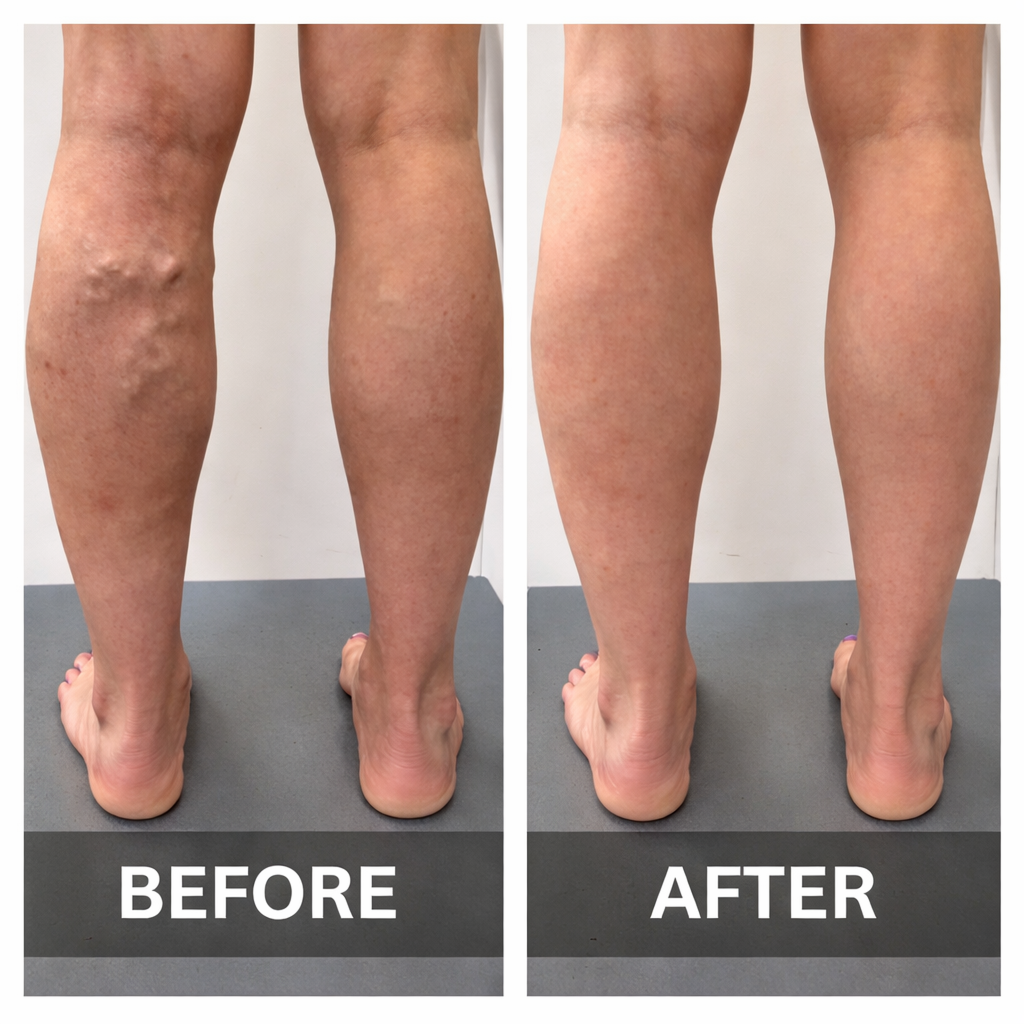
7 Reasons Pregnancy Varicose Veins Are Almost Impossible to Get Rid Of
(and what actually helps)
Varicose veins are one of the most common things pregnancy does to your legs.
But here's what many expecting moms don't realize until after they deliver the baby..
The swollen legs will go away, but the veins can stay for years after pregnancy.
Here's why they're so hard to get rid of, and what actually helps..
The pressure behind them never stops.
During pregnancy your body makes up to 50% more blood.
Gravity pulls it down into your legs, and it sits there.
Your veins aren't pipes. They're soft tissue.
Put soft tissue under that much pressure and it stretches. That's what pushes a vein up to the surface where you can see it.
And the pressure doesn't stop. It's there every hour you're standing up.
Once they show up, they usually don't go back.
This is the part that's hard to hear.
Swelling is fluid, and fluid drains away after birth.
A stretched vein is different. Once it's stretched, it can remain that way for years.
That's a varicose vein.
Some fade after birth. Most of them don't...
Which is why they need to be prevented during pregnancy, not treated afterwards...
Putting your feet up doesn't work.
You've probably heard this advice before.
Feet up works for as long as your feet are actually up.
If you're working, driving, or running errands, the blood still pools inside your legs, causing the pressure on your veins.
Even a few hours of pressure a day is enough to stretch a vein to the surface.
Your body needs something that works all day.
Regular compression socks can make it worse.
Most moms try compression next. Right idea, wrong pair.
Pharmacy socks and Amazon multipacks squeeze your whole leg at one pressure.
This traps the swelling and holds it inside your leg, which makes it worse.
Those leave red rings around your legs, and are a pain to wear throughout the day.
What actually works is graduated compression, firmest at the ankle, and easing up to your calf.
Every week you wait, the stretching gets worse.
The further along you get, the more blood your body is making.
So the pressure on your veins isn't steady. It's climbing.
A vein that's been under pressure for two weeks can still settle back.
A vein that's been holding that shape for four months has been stretched a long time.
It's why two moms with the same swelling can end up with completely different legs. One started early. One waited.
After birth, the only way to remove them is a procedure.
This is what makes them so hard to get rid of.
You can't treat veins while you're pregnant. Doctors wait until after the baby is born, and if you're breastfeeding you usually wait longer.
So the earliest you could start is months from now.
Treatments are expensive, and insurance doesn't cover it because they call it a 'cosmetic' procedure.
Or, you can prevent them now, while it still counts.
So what should you look for?
After hearing the same frustrations from thousands of pregnant moms...
Compression socks that were too tight.
Too hot.
Too difficult to put on.
Or simply not designed for pregnancy...
We built ours differently.
Every decision, from the graduated compression to the soft bamboo knit, was made around one goal:
Keeping the pressure off your veins, every hour you're on your feet.

3,458+ Happy Mothers Using LumaBelly💗
Try It Risk-Free Today
Frequently Asked Questions
Take the larger size. Compression stays effective and comfort improves. If the fit still isn't right, exchanges are free within 30 days.
Without compression support, blood continues to pool in your legs throughout the day. Over time this leads to worsening swelling, increased leg pain, a higher risk of varicose veins, and a 5x higher chance of developing a blood clot (DVT). Compression socks are one of the simplest and most effective ways to protect your circulation during pregnancy.
Absolutely. LumaBelly socks are made from ultra-soft, breathable fabric that feels gentle against your skin all day long. Most of our customers say they forget they're even wearing them, which is exactly the point.
The earlier the better. Most doctors recommend starting in the first trimester before swelling even begins, as prevention is far more effective than treatment. However it is never too late, even if you are already in your third trimester and experiencing swelling, you will feel a difference within the first few days of wearing them.
How long do they last?
Yes. Compression socks work by applying graduated pressure from your ankle upward, pushing pooled blood back toward your heart. This directly reduces swelling in your feet, ankles and legs. 80% of pregnant women deal with swelling — these socks are specifically designed to address exactly that.
We offer a full 30-day money-back guarantee. If for any reason you are not happy with your LumaBelly socks, simply reach out to us at info@lumabelly.com within 30 days of purchase and we'll refund you completely. No hassle, no stress.
Yes. OB-GYNs generally recommend expecting moms to wear compression socks.
LumaBelly compression socks are designed specifically for pregnancy, and reviewed and approved by OB-GYNs.
Yes, and it is actually recommended. After birth, your blood volume is still elevated and your circulation needs time to return to normal. Wearing compression socks for several weeks postpartum helps your body regulate blood flow, reduces postpartum swelling, and lowers your risk of blood clots, which remain elevated for up to 6 weeks after delivery.