Limited Stock! Your Cart is Reserved for [X] Minutes
YOUR CART IS EMPTY
[X] people also bought...
Subtotal$0.00
ADVICE FROM SAFETY SPECIALISTS
Leading OBGYNs: Car Seatbelts Put Your Baby In Danger Every Time You Drive (And What You Can Do About It)
By Dr. Sarah Mitchell, Maternal Safety SpecialistLast Updated: Feb 19th, 2025
4,821 ratings
If you're pregnant and driving anywhere - even just to the grocery store - read this short article before you buckle up with a regular seatbelt again.
Hi, my name is Dr. Sarah Mitchell, and I'm a maternal safety specialist from Denver, Colorado.
I have over 15 years of clinical experience working in prenatal care and trauma medicine, helping expectant mothers navigate the hidden risks of pregnancy.
During this time, I've logged over 12,000 hours consulting with pregnant women about everyday safety concerns that most doctors never discuss.
Throughout my career, I've treated thousands of patients - many of whom came to me after experiencing preventable pregnancy complications from situations they never thought were dangerous:
Minor car accidents that resulted in emergency room visits
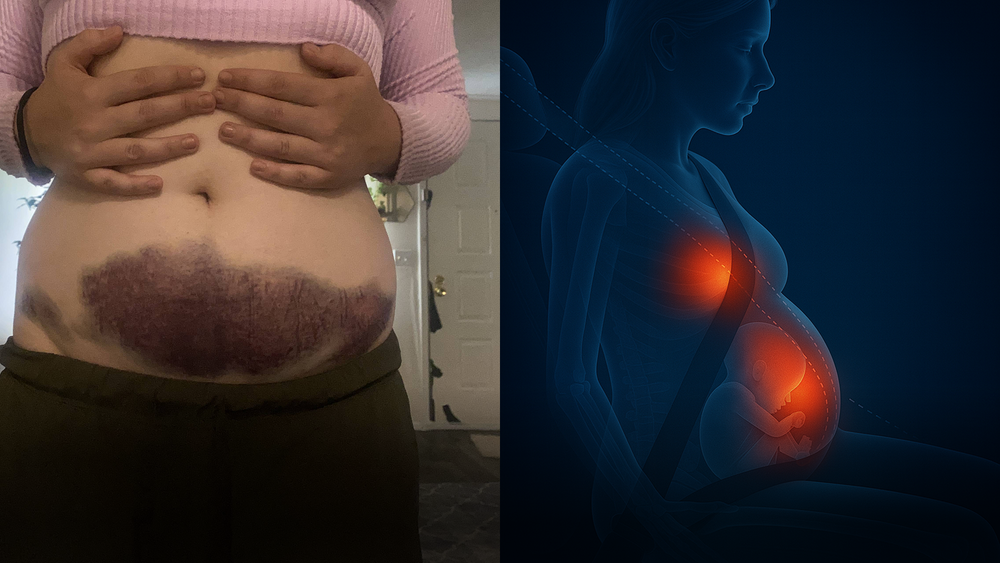
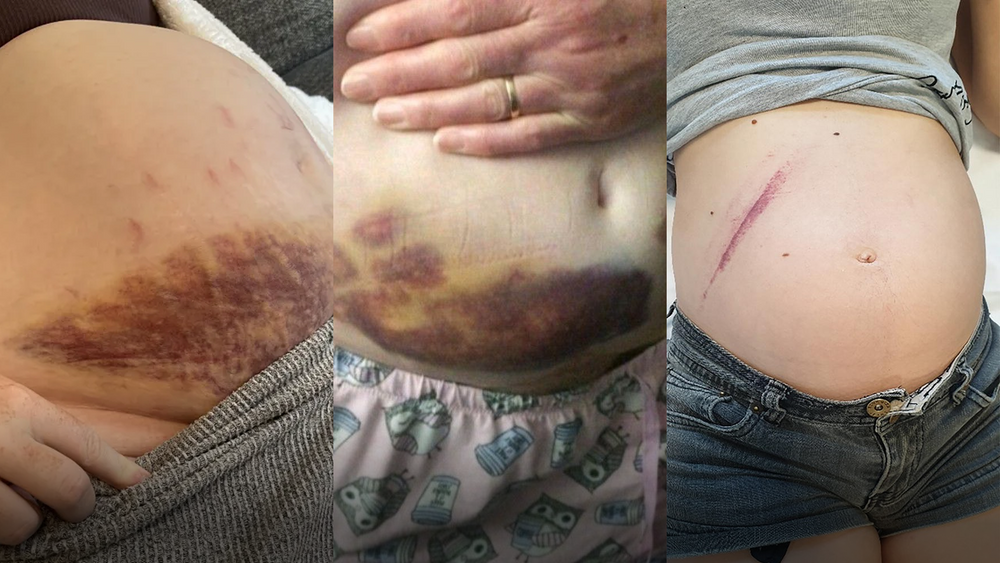
Sudden stops that caused severe belly bruising from the seabelt
Routine drives that ended in pregnancy complications
Fender benders that ended up causing shock to their baby
You name it, I've seen it all.
Unfortunately, the complications that occur have expecting mothers so terrified of driving that they avoid leaving their home, and carry trauma for the rest of their lives.
These images are real bruises caused by the force of the seatbelt, even in minor accidents or during sudden stops.
WARNING: Might cause discomfort for some users.
How Car Seatbelts Actually Cause Harm To Your Baby
Here's what's really happening inside your body when that lap belt presses into your belly:
During Normal Driving:
Even without an accident, every time you brake, turn, or hit a bump, the lap belt shifts and presses into your abdomen. This constant pressure can restrict blood flow to the placenta and create unnecessary stress on your baby throughout the entire drive.
During Sudden Stops:
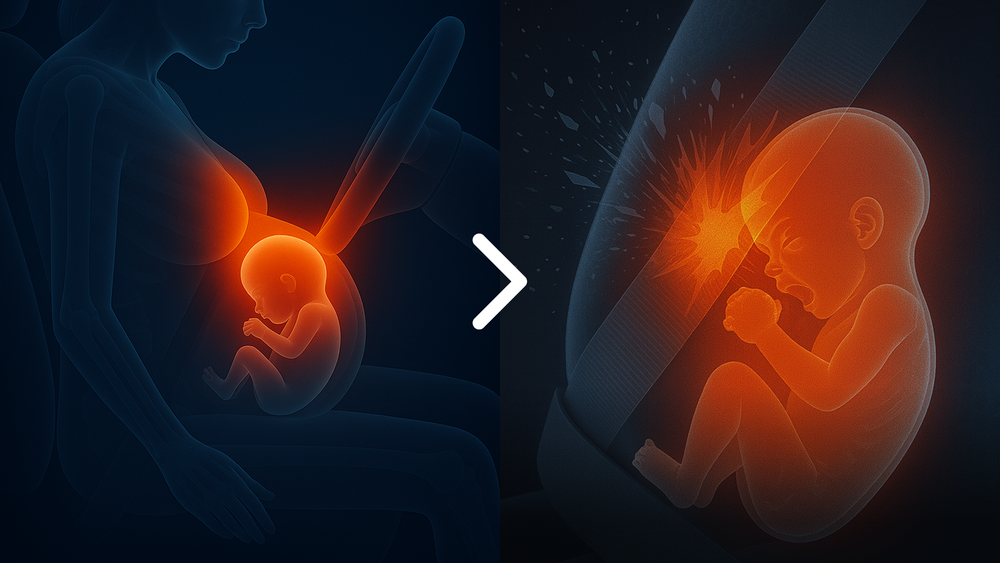
When you brake hard - say, at a red light or to avoid a car in front - your body lurches forward. The lap belt locks and digs into your belly, creating a crushing force that compresses your uterus. This sudden pressure can cause placental abruption (where the placenta separates from the uterine wall) or direct trauma to the baby.
During Accidents:
In a collision, even a minor one, the force is exponentially greater. The lap belt becomes a focal point of impact, concentrating thousands of pounds of force onto a small area of your belly. This is what causes:
Direct blunt force trauma to the baby and uterus
Internal bleeding from damaged blood vessels
Placental tears that can cut off oxygen supply
Premature labor triggered by the shock to your system
Fetal distress from the sudden compression and impact
Your pelvis and hip bones are designed to absorb impact force. Your belly is not.
Yet standard seatbelts position all that force exactly where your baby is growing.
The Silent Risk Most Pregnant Women Don't Realize Until It's Too Late
Here's what makes this so dangerous:
Most expecting mothers don't feel anything wrong during their daily drives.
The lap belt riding up on your belly might feel uncomfortable, sure. But it doesn't feel dangerous.
You're not experiencing pain. Your baby is moving normally. Everything seems fine.
And that's exactly the problem.
Because while you might not notice anything during regular drives to work, doctor appointments, or running errands...
The risk is accumulating with every single trip.
Each time you drive with improper belt positioning, you're exposing your baby to potential complications:
So What's the Solution?
Now, you might be thinking: "Can't I just adjust the belt myself? Or sit on it? Or use a pillow?"
Trust me, every pregnant woman has tried those "hacks."
Sitting on the lap belt (dangerous and illegal - you lose all lower body restraint)
Constantly repositioning it at every stoplight (it rides back up within 30 seconds)
Tucking a towel or pillow underneath (provides zero structural support during impact)
Using only the shoulder strap (even more dangerous)
None of them actually work. And some make you significantly less safe.
The real issue isn't your technique or how many times you adjust the belt.
The Automotive Engineer's Solution That Finally Makes Sense
It's called proper belt redirection.
For over a decade, maternal safety specialists in Europe. where pregnancy car safety standards are more strict, have been using a simple mechanical principle:
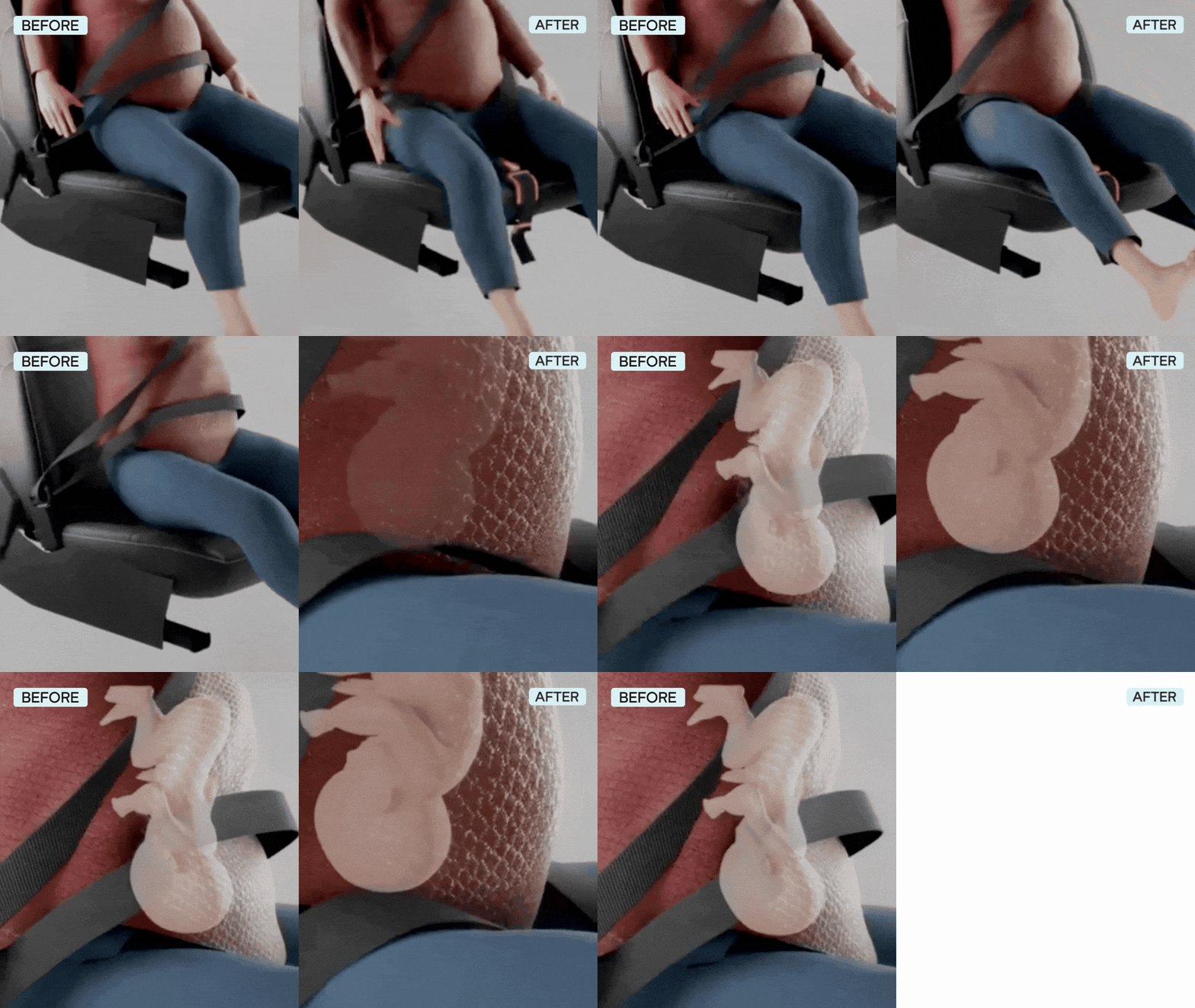
Redirect the lap belt's positioning using a rigid anchor point that holds it below the belly, no matter what happens during the drive.
This isn't a comfort accessory. This is a crash-tested engineering solution.
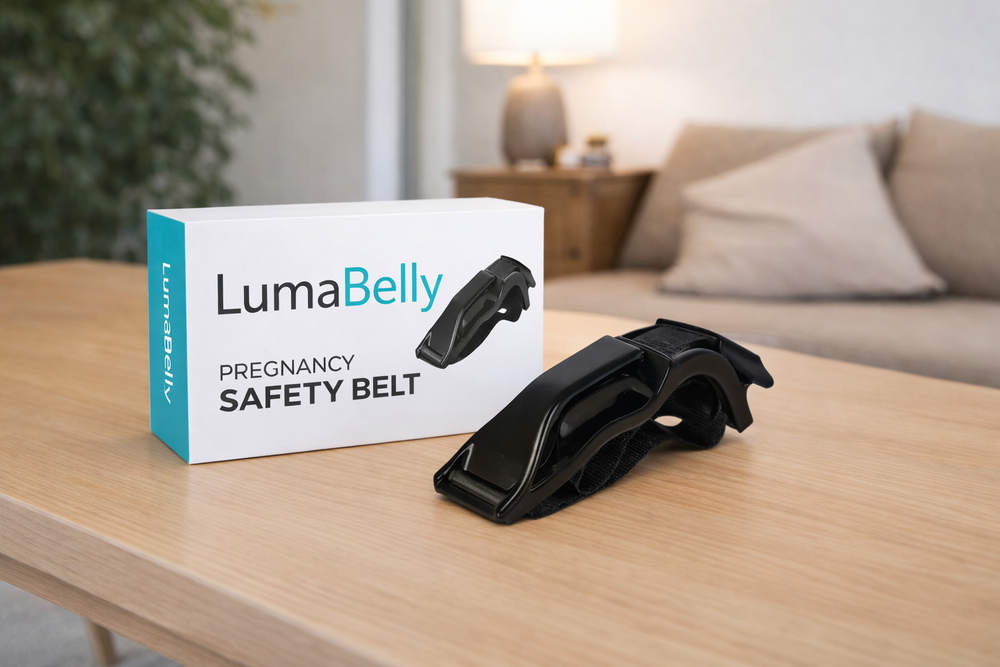
Introducing LumaBelly™ Pregnancy Safety Belt Adjuster
LumaBelly is a seatbelt positioning device developed by automotive safety engineers specifically for pregnant drivers and passengers.
It's not a replacement for your seatbelt. It's not a cushion or comfort product.
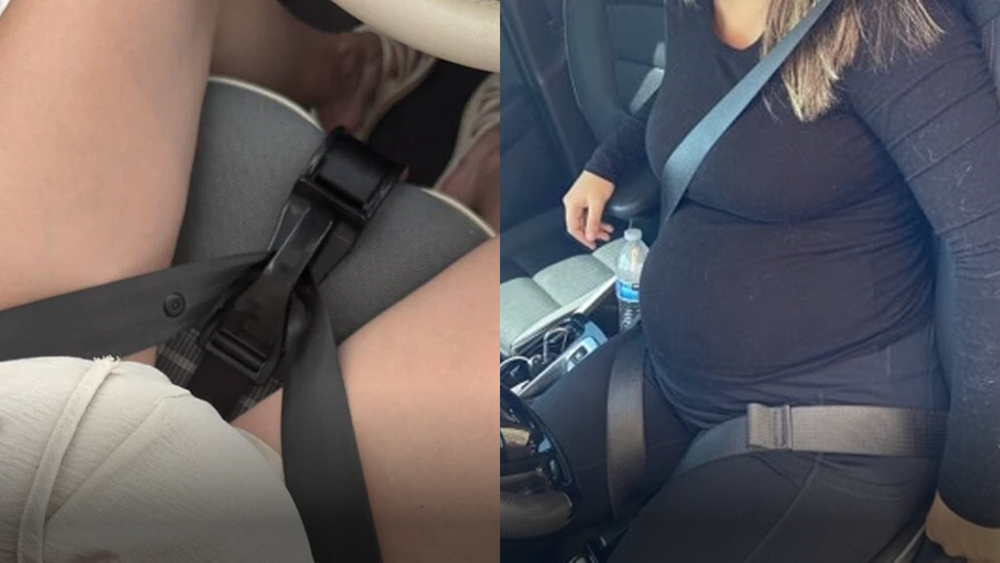
It's a mechanical positioning system that redirects your lap belt away from your belly and maintains that position throughout your drive.
Here's what makes it different from the cheap fabric "belly bands" you might see online:
Structural Integrity LumaBelly has a steel inner core that maintains its shape and positioning under force. Unlike stretchy fabric alternatives that deform or break during impact, the rigid structure keeps the belt exactly where you position it - even during sudden stops or collisions.
Crash-Test Certified The device has been crash-tested to FMVSS213 standards - the same testing protocol used for child safety seats. This means it's been subjected to the same impact simulations and safety validations that protect children in vehicles.
Universal Vehicle Compatibility Works with any standard three-point seatbelt system in any vehicle. Cars, trucks, SUVs - if it has a lap and shoulder belt, LumaBelly installs in under 2 minutes.
Maintains Legal Compliance Because you're still wearing your vehicle's original seatbelt system (just repositioned), you remain fully compliant with all traffic safety laws. The device doesn't replace or disconnect any part of your car's safety equipment.
Adjustable Throughout Pregnancy Designed to work from the moment your belly starts showing through full term. As your body changes, the positioning adjusts while maintaining the same engineering principle: belt below the bump.
Saved my baby girl!! I’m in my 34th week and was driving home in the rain last night when another car tried to run the light right as I started crossing the intersection. I slammed on the brakes and though I’m shaken up, LumaBelly kept me secure behind the wheel with no pressure on my stomach. I’m unharmed and baby girl is up and kicking today. I’ll recommend this to anyone I know who’s expecting. Thank you for keeping us safe. - Emily D.
It feels sooo much safer “I thought I was being clever by tucking the seatbelt under my bump. Turns out that can actually make it worse - the belt rides up during braking and hits right across your stomach again. My husband found LumaBelly and convinced me to try it.It’s crazy how much safer and more comfortable it feels. It locks the belt below the belly so it doesn’t move, even when I brake hard.I drive every day to work, and now I feel calm instead of tense the whole ride.” - Laura E.
My Doctor recommended this belt “When I told my OB how uncomfortable the seatbelt was getting, she immediately suggested I try this. I was skeptical because I’d seen mixed opinions online - someone even said it might not be safe. But then I saw a study about how it redirects crash force to the hips and thighs (the safest bones in the body), I felt reassured.I installed it in two minutes and now I can buckle up in seconds. No digging, no pressure on my belly.I honestly wish every pregnant woman knew this exists. - Mariah T.